Capital punishment and state responsibility
A ManCapital punishment and state responsibility form a central ethical problem in Kido’s reflections: the state claims authority to punish murder, yet may also have failed to address the conditions that helped shape a person’s life and crime. The novel develops this tension through a public debate over death-row art, Kido’s account of proportional punishment, and his response to the history of Kenkichi Kobayashi and his son Makoto Hara. It does not excuse murder; it asks whether execution lets the state evade its own part in the harm and whether eliminating a lawbreaker can honestly be called justice.
The question raised by death-row art
Kido’s interest in capital punishment sharpens when he visits an exhibition of art made by death-row prisoners. He is opposed to the death penalty, but has not joined the abolition movement; his immediate curiosity comes from his encounter with Omiura and the prison postcards Omiura sent him. The exhibition gives that curiosity a wider frame: Kido wonders what people facing both the memory of a crime and an impending execution make in the present.
The works vary widely, from illustrations and manga-style doodles to watercolors and a chart of prison miso-soup toppings. Kido considers what the artists might be trying to put before the public. Few directly deny committing their crimes. Instead, some appear to insist that they are not reducible to the kind of person who could have committed them, or to preserve traces of a self beyond the body the state is preparing to destroy. Cute or gentle images can therefore sit uneasily beside the crimes associated with their makers: they make visible dimensions of a person that a single legal identity, and ultimately execution, threatens to erase.
That interpretation does not settle the moral argument. During the discussion accompanying the exhibition, Kido is troubled that no one has mentioned the victims. The omission is one reason he has hesitated to become active in the abolition movement: opposition to execution, in his view, should not require neglecting those who suffered the crime or their surviving families. The debate must hold both the condemned person’s humanity and the victim’s loss in view.
Proportional punishment and the limits of retaliation
Sugino answers a challenge from Kawamura by distinguishing legal rights from emotional responses to murder. He describes Japan’s approach as proportional retributivism, not absolute retribution: the principle commonly expressed as “an eye for an eye” is, in his account, a restraint on retaliation, not a mandate to reproduce an injury on the offender’s body. Modern punishment instead restricts freedom in proportion to the crime. A person who blinds a victim does not have their own sight taken away; the punishment is imposed through loss of liberty.
Sugino argues that execution falls outside this principle because it is corporal punishment and takes the condemned person’s life, rather than imposing a measured restriction of freedom. He also points out the consequence of making the victim’s total deprivation of freedom a guide to punishment: taken consistently, that logic would deny death-row prisoners the capacity to think or feel. Kawamura accepts that conclusion and says the condemned should be executed immediately, treating every further moment of their lives as an unjust luxury beside the lives of those murdered.
Sugino’s position is not that the victims should disappear from public discussion. He supports the condemned person’s ability to make art, while arguing that an exhibition of work by victims’ surviving family members would also be valuable. He leaves citizens to view both and form their own judgments. For Kido, the exchange exposes a real gap: a legal argument against execution may be coherent, yet can seem emotionally remote when it does not give the victims a comparable place in the conversation.
Kobayashi, Hara, and the state’s part
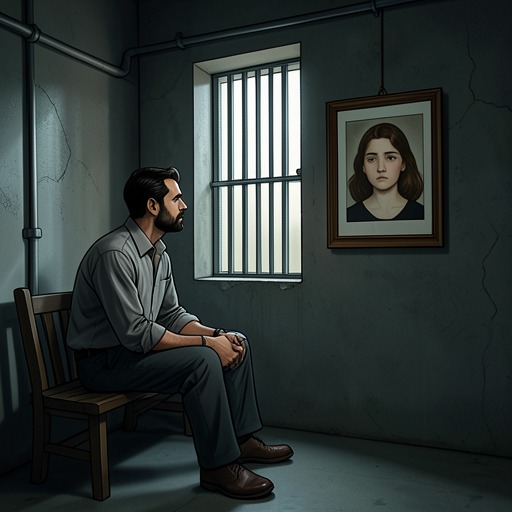
The problem becomes personal for Kido through the history of Kenkichi Kobayashi, who was executed for killing three people during a robbery and setting fire to the house in 1985. Kobayashi’s son Makoto was born in 1975, the same year as Kido. After the crimes drew extensive press attention, Makoto’s mother moved away with him; he was later recorded as living in an orphanage in Maebashi. The public record of his childhood and subsequent life was sparse, but the consequences of his father’s notoriety followed him.
Makoto eventually became a professional boxer and won the bantamweight title in the East Japan Rookie King Tournament in 1997. Before the All Japan Rookie King Championship Match, he withdrew from the bill and disappeared. For nearly a decade he supported himself through day labor, changing workplaces as rumors of his parentage surfaced. From 2006 onward he was repeatedly reported for shoplifting; after an initial suspended sentence, he was imprisoned for a further offense and convicted of shoplifting again after his release. A magazine profile sympathized with his circumstances but ended by speculating that criminal tendencies might be inherited. The juxtaposition leaves open a question the profile cannot answer: whether repeated wrongdoing demonstrates an inherited disposition, or how much a life has been shaped by stigma, trauma, and the circumstances around it.
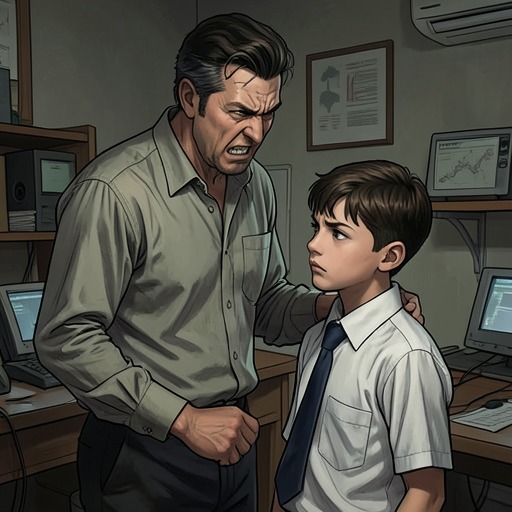
Kido does not treat those circumstances as a reason to absolve Kobayashi. He recognizes that people remain responsible for what they do and does not claim that free will can be entirely denied. But he also considers Kobayashi’s early environment plainly deplorable and believes it contributed significantly to his later deterioration. The state, in his view, failed to remedy the misfortune of one of its citizens and then executed him for violating the legal order the state upholds. To present that sequence as justice is, for Kido, to let the judiciary cancel out failures by other branches of government through the destruction of the person left to bear their consequences.
Kido fears that this logic can become a cycle: social conditions remain unaddressed, people harmed by those conditions become lawbreakers, and the state answers by executing more of them while presenting its own actions as righteous. His argument is not that the state alone causes crime, nor that offenders should be forgiven. It is that punishment cannot erase the responsibility of public institutions to respond to preventable deprivation and to support people harmed by crime.
Private disagreement, public responsibility
Kido’s position has already placed him at odds with Kaori. When Sota had just turned one, she asked what should happen if someone murdered their child and then pressed him on whether he would want the murderer executed. Kido answered that if society is to reject murder, it must also reject killing as an acceptable response, even in extreme cases. He argued that offenders may never be forgiven, but the state should accept responsibility for the social conditions underlying crimes and provide substantial support to victims rather than feigning innocence and catering to punitive feeling.
Kaori reacted with anger and disappointment, and the couple ended the conversation before it caused a lasting rupture. Their disagreement gives the political question an intimate consequence. Kido’s principle is consistent, but it does not make grief, fear, or the demand for punishment disappear; the discussion stops because the imagined tragedy is not theirs to settle. The distance between a general ethic and a family’s possible loss remains unresolved.
Kido’s reflections also resist the idea that culpability begins and ends with an isolated individual. He thinks of children playing innocently and wonders whether one of them may someday kill, whether through desperation or ignorance, and who would bear responsibility. He recalls that Kobayashi was once a child too, and considers the childhood conditions of young perpetrators in the James Bulger case. Japan’s Juvenile Act sets a legal boundary around age and culpability, but, as Kido observes, accumulated harmful influences do not vanish when a person crosses into adulthood. He shares Nakakita’s view that character emerges from the interaction of genetic and environmental factors, and rejects the claim that everything is simply an individual’s responsibility.
The novel holds these claims in tension rather than offering a clean resolution. Kido condemns murder while questioning a state that answers it by killing; he acknowledges personal responsibility while insisting that social responsibility cannot be set aside. The death penalty becomes the starkest instance of a wider problem: a government may punish the visible offender and still refuse to reckon with the conditions and victims left behind. For Kido, justice requires more than the state’s authority to end a life; it requires the state to answer for what it has failed to prevent and for the people its punishments do not repair.